

Why Loganville Homeowners Are Replacing the Tub With a Walk-In Shower — And When It’s a Mistake
Tub-to-shower conversions are the most requested bathroom change we get around Loganville and Lawrenceville. Usually they are the right call. Occasionally they are a decision homeowners regret at resale — and the difference comes down to which bathroom you are changing.
Here is the pattern we see constantly: a primary bathroom with a builder-grade garden tub that takes up a quarter of the floor space, alongside a shower so small you have to choose between rinsing your hair and keeping your elbows down.
Nobody has taken a bath in that tub since 2011. It holds shampoo bottles and a decorative plant. Meanwhile the shower — the thing actually used twice a day — is the worst part of the room.
WHY THE CONVERSION USUALLY MAKES SENSE
Trading an unused tub for a properly sized walk-in shower is one of the highest satisfaction-per-dollar changes available in a home. The reason is simple: you are converting dead square footage into space you use every single day.
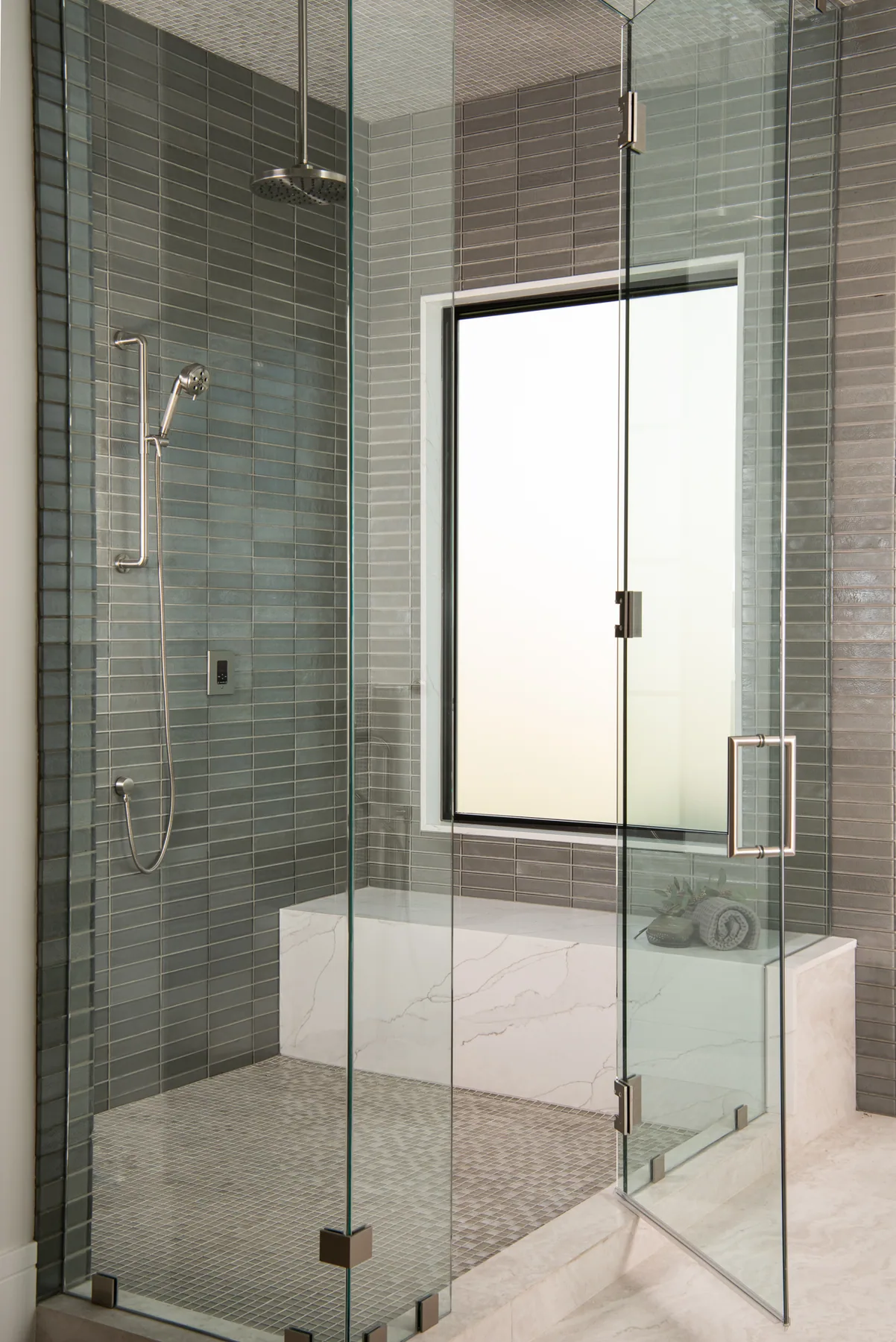
- A 60-inch tub footprint becomes a genuinely comfortable shower with room for a bench.
- Clear glass instead of a tub surround makes the entire bathroom read larger.
- A curbless entry removes a step-over that becomes a real issue as people age.
- Modern waterproofing replaces a tub surround that is often the oldest, leakiest assembly in the house.
WHEN IT IS GENUINELY A MISTAKE
There is one scenario where we will tell a client to slow down: when it would leave the house without a single bathtub.
If your home has two bathrooms and you convert both, you have quietly removed your house from consideration for every buyer with a toddler. That is a meaningful slice of the market in family neighbourhoods around Loganville, Dacula and Lawrenceville.
The practical rule we give homeowners: convert the primary, keep a tub in the hall or guest bath. You get the shower you actually want, and the house keeps the tub a future buyer will want. Nobody loses.
Convert the bathroom you use. Keep a tub in the bathroom you don’t.
THE SECOND MISTAKE: UNDERBUILDING THE SHOWER
Having decided to convert, the most common regret is not the decision — it is building the new shower too conservatively. Specifically:
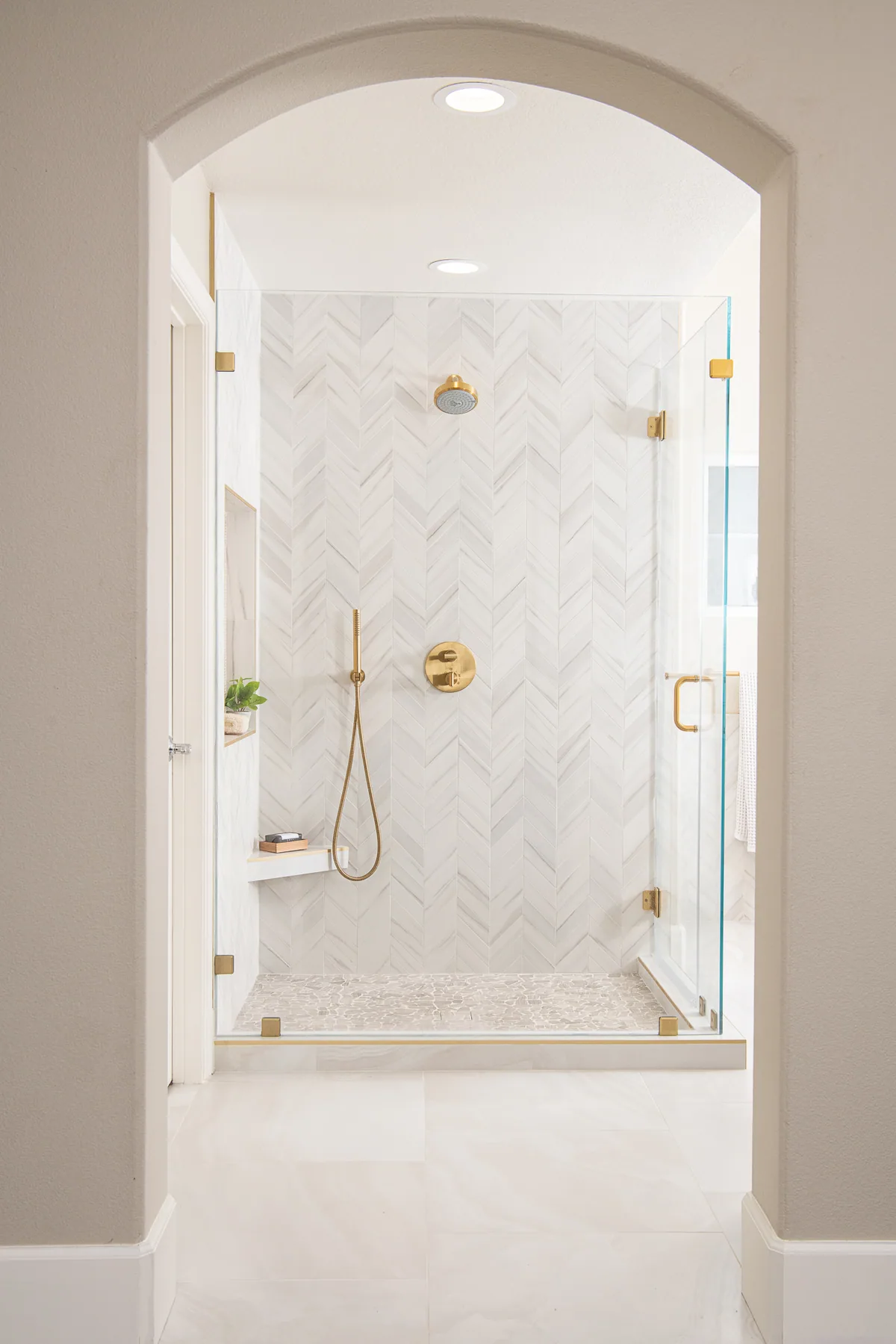
- Going too small. If you have the tub footprint, use it. A 60-inch shower feels dramatically different from a 48-inch one.
- Skipping the bench. It costs comparatively little during framing and becomes the feature people mention most afterwards.
- Keeping a curb you did not need. Curbless entries are more work but transform how open the room feels and how long it stays usable as you age.
- Choosing framed glass to save money. The saving is modest. The visual difference is not.
WHAT HAPPENS BEHIND THE TILE MATTERS MORE
Here is the part nobody shops on, and the part that determines whether the shower lasts twenty years or five.
A shower is the only assembly in your house designed to be soaked daily. The tile is not waterproof — grout is porous and water goes through it. What keeps the water out of your framing is the membrane system behind the tile and the slope of the pan beneath it.
A shower pan needs a pre-slope under the liner, not just a slope on top of it. Without one, water that penetrates the tile sits flat on the liner instead of draining, and it stays there. That is the failure we are called to open up and rebuild, usually about four to six years after someone else built it.
WHAT THE CONVERSION ACTUALLY INVOLVES
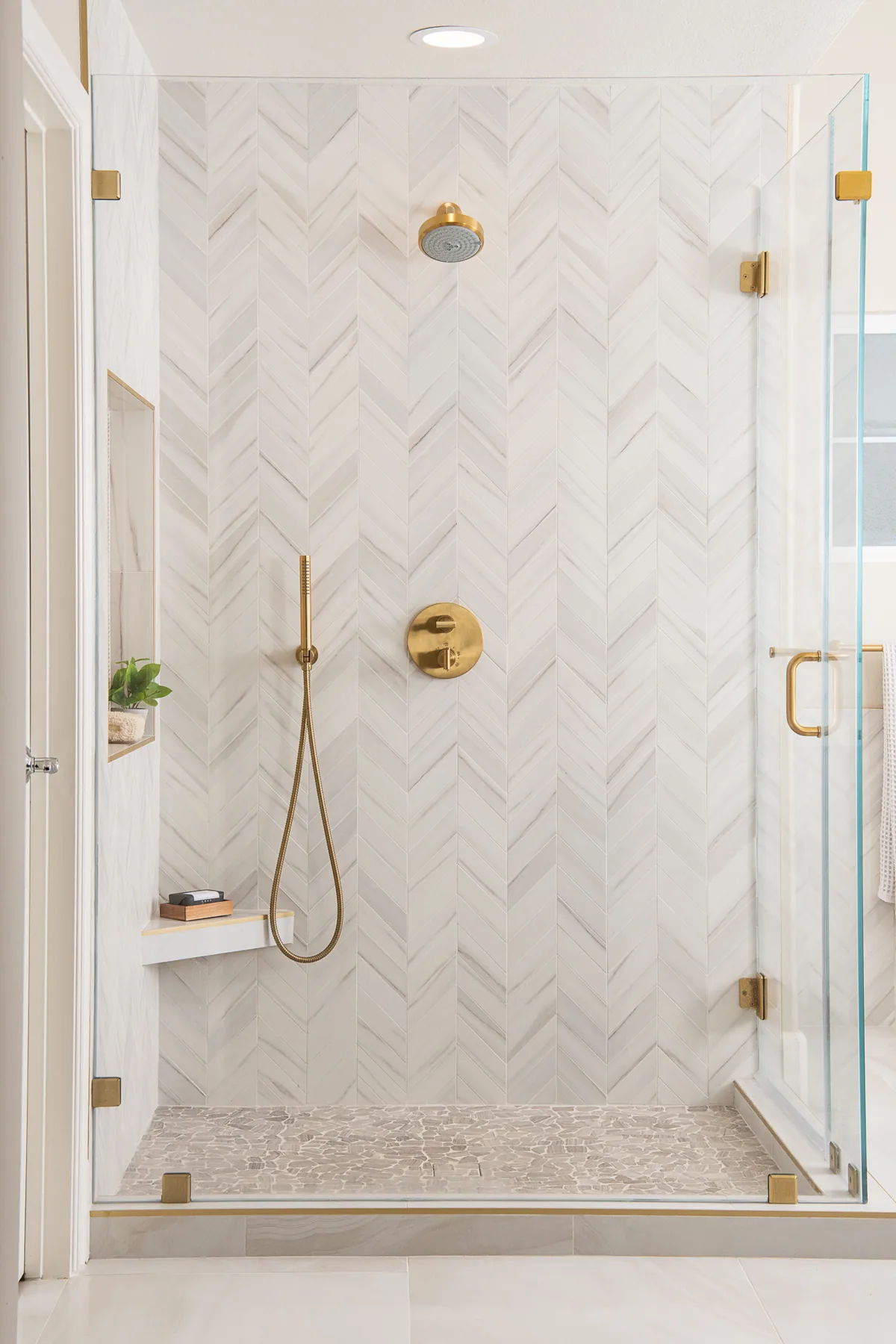
- Demolition of the tub, surround and any damaged framing or subfloor beneath it
- Plumbing changes — the drain moves, and the valve is usually replaced
- Framing for the bench, niches and the curbless floor recess if you are going that route
- A bonded waterproofing system across the pan and walls, then a flood test
- Tile set to a layout that has been dry-fit, so cuts fall at edges rather than eye level
- Frameless glass, templated after tile is set — which is why it arrives last
Most tub-to-shower conversions run three to five weeks on site. The glass is usually the longest single wait, which is why we template it the moment the tile is finished.
THE HONEST SUMMARY
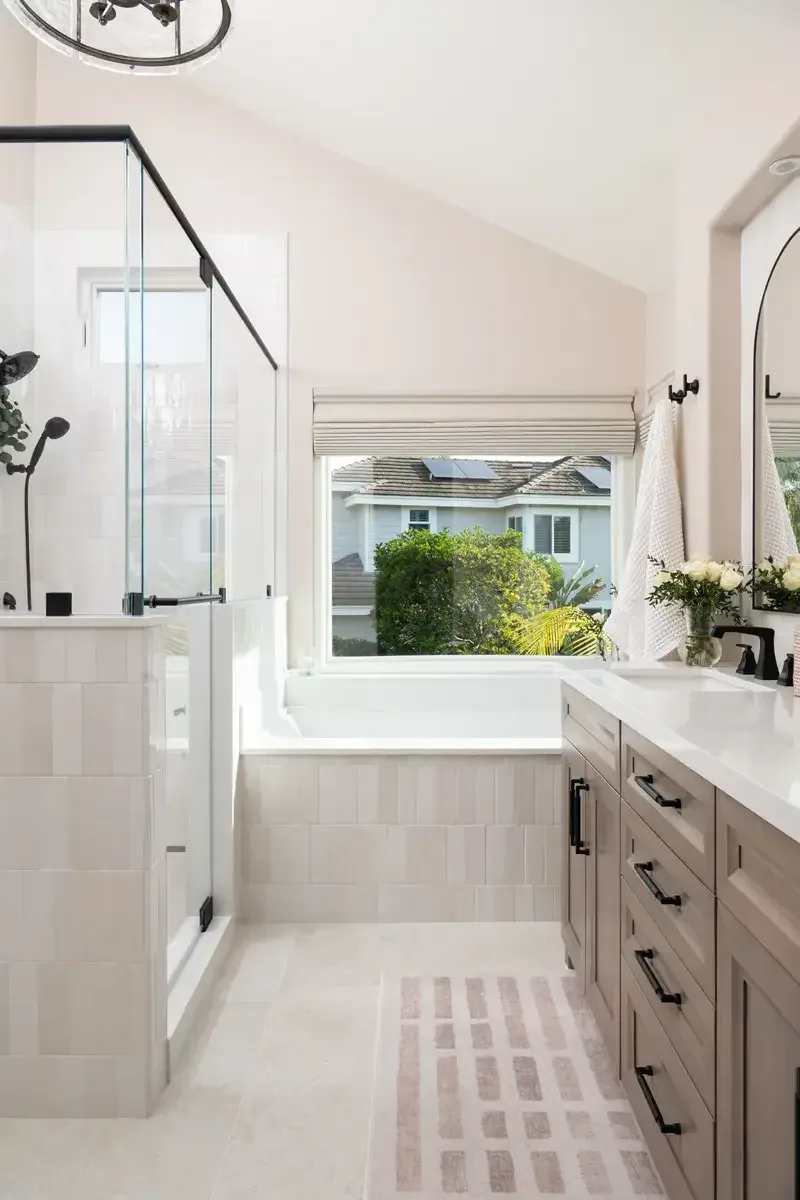
If it is your primary bathroom, nobody bathes in the tub, and there is another tub somewhere in the house — convert it, and build it bigger than you think you need.
If it is your only tub, think harder. And if a contractor agrees to convert every tub in your house without mentioning resale once, that tells you something about whose interest they are tracking.
SERVING GRAYSON AND THE SURROUNDING COMMUNITIES
We remodel bathrooms across Gwinnett County — Lawrenceville, Loganville, Snellville, Dacula and Lilburn — along with Monroe, Bethlehem, Winder, Stone Mountain, Tucker, Lithonia, Duluth and Conyers, roughly 20 miles around our Gwinnett County studio.
 Start Your Renovation
THINKING ABOUT CONVERTING YOUR TUB?
Your private reset.
Tell us what room you have in mind and roughly when you would like to start. Janet reads every message personally and will come back to you with clear next steps — not a sales pitch. Consultations and estimates are always free.
Gwinnett County, Georgia · Serving a 20-mile radius