

The Basement Finishing Mistake Most Snellville Homeowners Make Before They Call a Contractor
Finishing a basement is the cheapest square footage you will ever add to a Georgia home. It is also the project where one skipped step quietly guarantees you will pay for the whole thing twice.
The mistake is not choosing the wrong flooring, or overspending on a wet bar, or picking a layout that does not work. The mistake is finishing a basement that was never dried out first.
It happens because the symptom is easy to dismiss. The basement is not flooding. There is no standing water. It just smells slightly musty in August, and there is a faint chalky line along the bottom of the block wall that has been there since you moved in.
WHY GEORGIA BASEMENTS ARE DIFFERENT
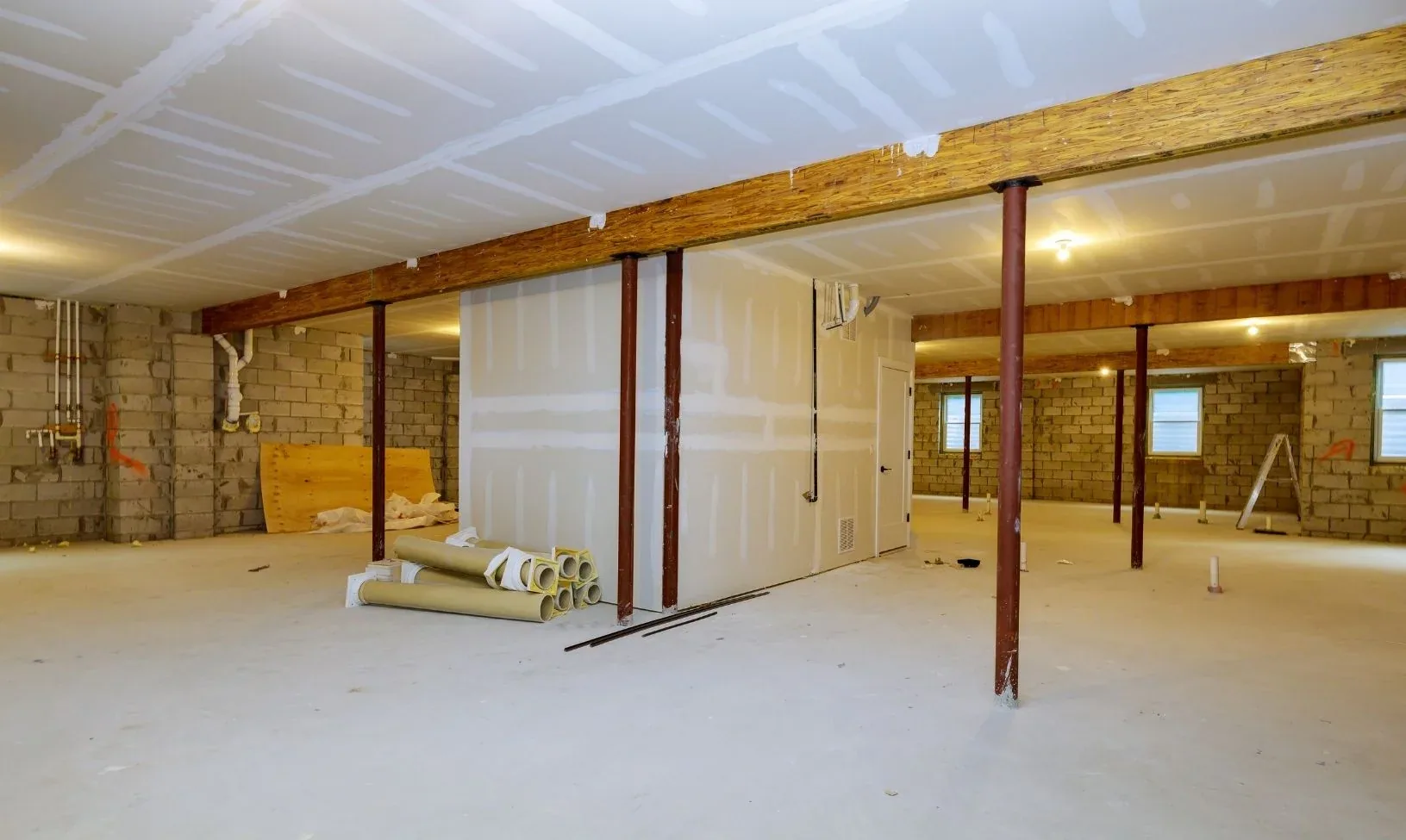
Our soil holds water, our summers are humid, and a below-grade wall is in permanent contact with ground that is wet for much of the year. Water moves through concrete and block by hydrostatic pressure and by vapour diffusion — it does not need a crack to get in.
That is the part homeowners find surprising. A wall can be structurally perfect and still pass a meaningful amount of moisture into the space as vapour. In an unfinished basement that vapour dries into the air and you never think about it. Put insulation and drywall against that wall and you have built a cavity that stays damp and never dries.
WHAT THAT COSTS YOU LATER
Two to four years after the project is finished, it shows up as one of these:
- A persistent musty smell nobody can locate
- Baseboards or drywall bottoms that darken, soften or bubble
- Flooring that cups, lifts or delaminates in patches
- Visible mould growth on the back side of drywall — found only when something is opened up
- Allergy and asthma symptoms in the household that improve when nobody uses the basement
The repair means removing the finishes you just paid for, correcting what should have been corrected first, then rebuilding. You pay for the basement twice and live through it twice.
A beautiful basement built over an unresolved water problem is a very expensive temporary room.
WHAT SHOULD HAPPEN BEFORE A SINGLE STUD GOES UP
Find out where the water is coming from
Most basement moisture around Snellville and Lawrenceville is not dramatic foundation failure. It is surface water: gutters discharging next to the foundation, grading that slopes back toward the house, a downspout extension that got removed years ago, or a window well without drainage.
The cheapest fixes are almost always outside the house. Any contractor who goes straight to interior solutions without walking your exterior is skipping the easy wins.
Test the slab
A plastic sheet taped to the slab for 24 to 48 hours tells you a great deal. If moisture collects underneath, the slab is passing vapour and your flooring choice has to account for it. This test costs essentially nothing and is skipped constantly.
Decide how the walls will dry
Below-grade wall assemblies need to be built so they can dry in at least one direction. That drives insulation type and whether a vapour barrier belongs in the assembly at all. Getting this wrong is how a technically well-built wall rots from the inside.
THE OTHER THING TO SETTLE EARLY: CODE
Finished basements in Gwinnett and the surrounding counties require permits and inspections. The items that catch people out:
- Egress. Any sleeping room below grade needs a compliant egress window and well. This is a safety requirement, not a formality.
- Ceiling height. There is a minimum for habitable space. Measure before you design, not after.
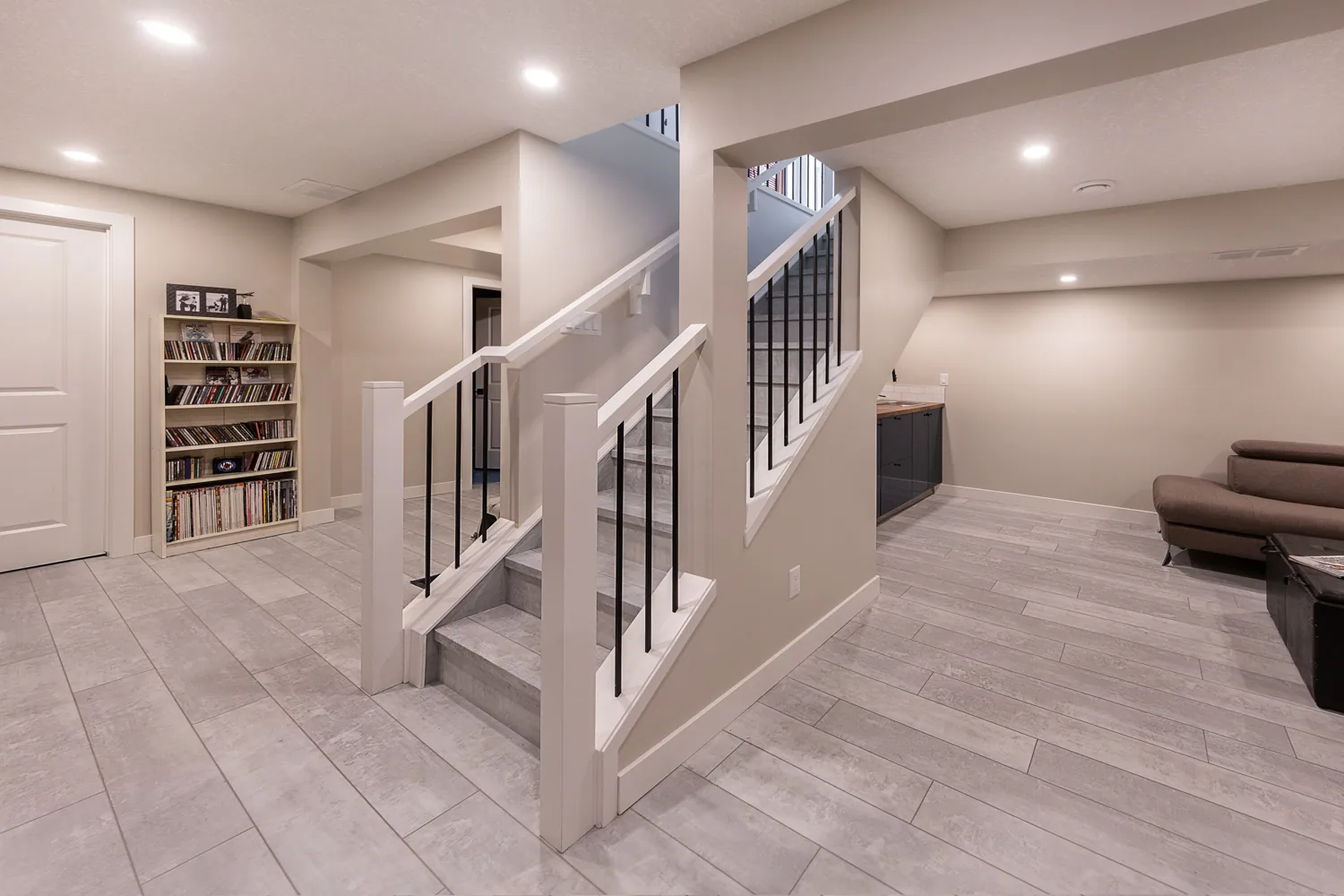
- Stairs and handrails. Older basement stairs frequently do not comply and need correcting.
- Smoke and CO detection. Required, interconnected, and inspected.
- Bathroom drainage. If the drain line sits above the slab, you need an ejector pump. Routine, but it belongs in the budget from day one.
Unpermitted basement work does not disappear. It surfaces during the inspection when you sell, as unpermitted square footage that either gets excluded from the appraisal or has to be opened back up.
WHAT A PROPERLY SEQUENCED BASEMENT LOOKS LIKE
- Assessment of moisture, grading, drainage, ceiling height and egress — before any pricing
- Exterior corrections first: gutters, downspout extensions, grading, window wells
- Interior drainage or vapour control where the assessment calls for it
- Design and permits, planned around columns, ducts and beams
- Egress cut-in, framing, then mechanical, electrical and plumbing rough-in
- Inspections, insulation, drywall, flooring and finishes
- Dedicated dehumidification sized for the space, not borrowed from upstairs
One question worth asking every basement contractor: “What will you do to confirm this basement is dry before you frame it?” If the answer is vague, or if it is “it looks fine,” keep interviewing.
THE PAYOFF, WHEN IT IS DONE RIGHT
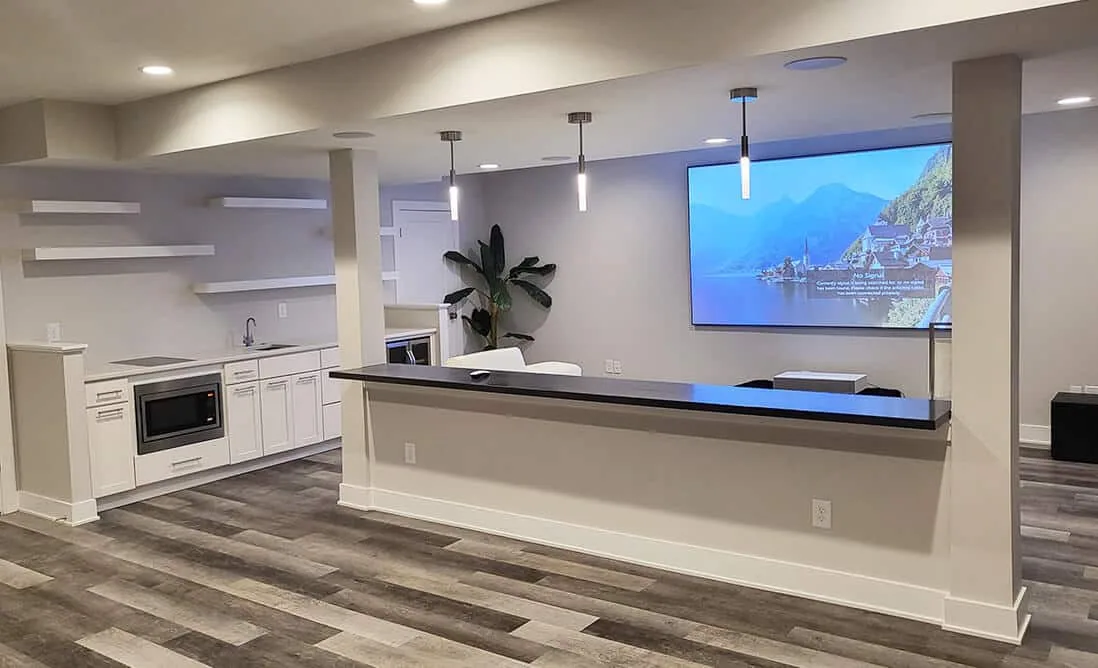
A properly finished basement adds an entire floor of living space for a fraction of what an addition costs, without touching your footprint, roof or foundation. A media room, a guest suite, a gym, a home office, a full in-law apartment — all of it on square footage you are already heating.
It is genuinely the best value in residential renovation. It just has to be built in the right order.
SERVING GRAYSON AND THE SURROUNDING COMMUNITIES
We finish basements throughout Gwinnett, Walton, Barrow, DeKalb and Rockdale counties — including Snellville, Loganville, Lawrenceville, Dacula, Buford, Sugar Hill, Monroe and Conyers — inside roughly a 20-mile radius of our Gwinnett County studio.
 Start Your Renovation
READY TO FINISH YOUR BASEMENT PROPERLY?
More room for life.
Tell us what room you have in mind and roughly when you would like to start. Janet reads every message personally and will come back to you with clear next steps — not a sales pitch. Consultations and estimates are always free.
Gwinnett County, Georgia · Serving a 20-mile radius