

Why Hardwood Floors in Lawrenceville Homes Start Cupping — And What Actually Prevents It
If the edges of your hardwood boards sit higher than their centres, that is cupping — and it is almost never a defect in the wood. It is a moisture story, and it usually began before the floor was ever installed.
We get called about cupped floors across Lawrenceville, Duluth and Snellville every year, most often in late summer. The homeowner assumes they bought bad flooring. In nearly every case, the wood is fine and the install was rushed.
WHAT CUPPING ACTUALLY IS
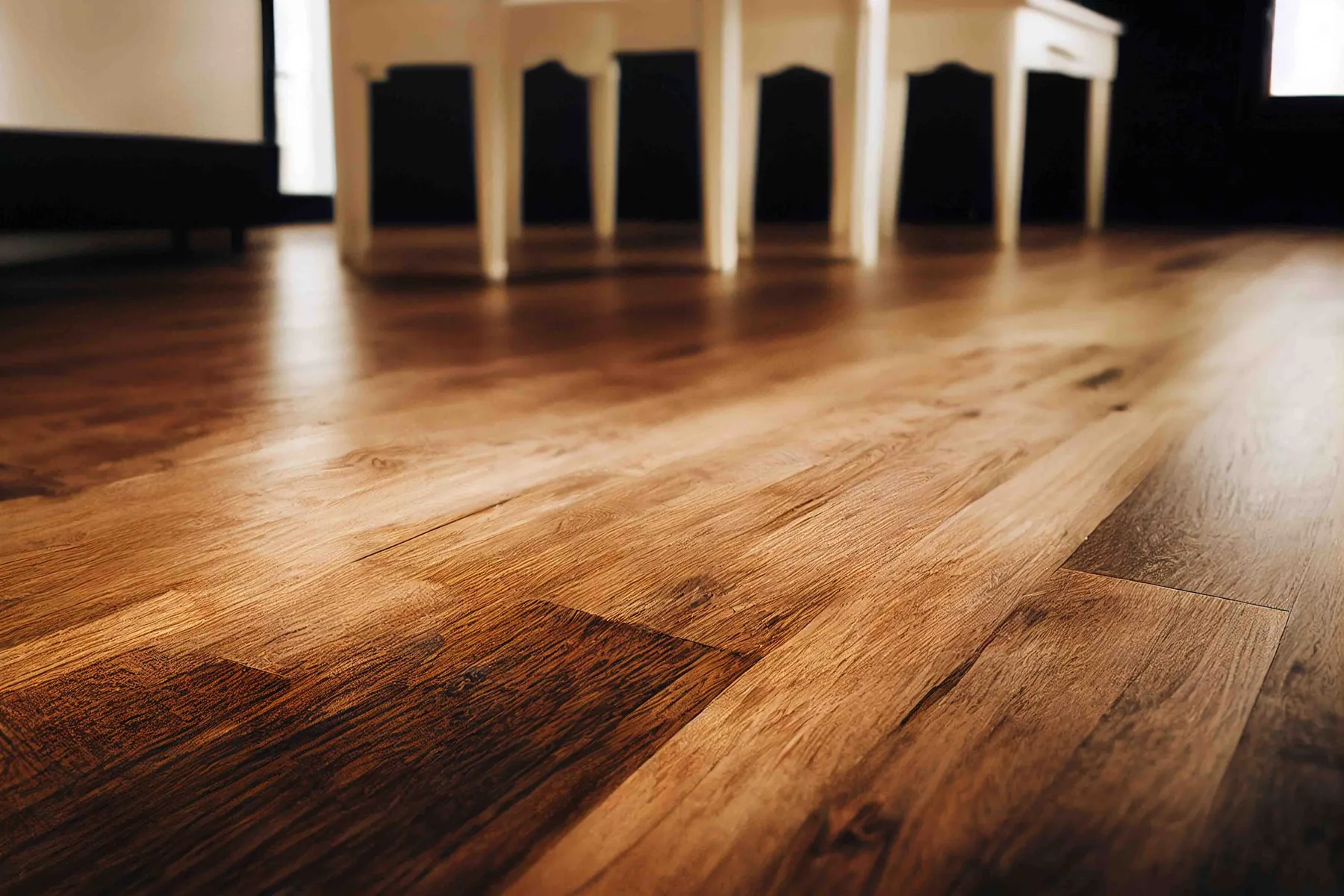
Wood is hygroscopic: it absorbs and releases moisture from the air around it, and it changes dimension when it does. When the underside of a board is wetter than the top, the bottom swells more, and the board’s edges lift relative to its centre. That is cupping — a moisture imbalance, not a manufacturing fault.
The reverse — crowning, where the centre sits higher — usually means someone sanded a cupped floor flat before it had finished drying out. Which is why sanding is the wrong first response.
THE FOUR CAUSES, IN THE ORDER WE FIND THEM
1. The wood was never acclimated
This is the big one. Flooring delivered from a warehouse carries that warehouse’s moisture content, which is rarely your home’s. It needs to sit in the conditioned house — ideally in the rooms where it will be installed — long enough to reach equilibrium.
Acclimation takes days, not hours, and it is the single most commonly skipped step in residential flooring. It is also free. It costs a contractor nothing but schedule, which is exactly why a rushed crew skips it.
2. Moisture coming up from below
A vented crawlspace in Georgia humidity is a reservoir of moist air sitting directly under your subfloor. If it is not sealed, conditioned or at least covered with a proper ground vapour barrier, that moisture migrates upward into the back of your boards year-round.
On a slab, the same problem arrives as vapour through the concrete. Both are testable before installation and both have straightforward solutions — if anybody checks.
3. No expansion gap
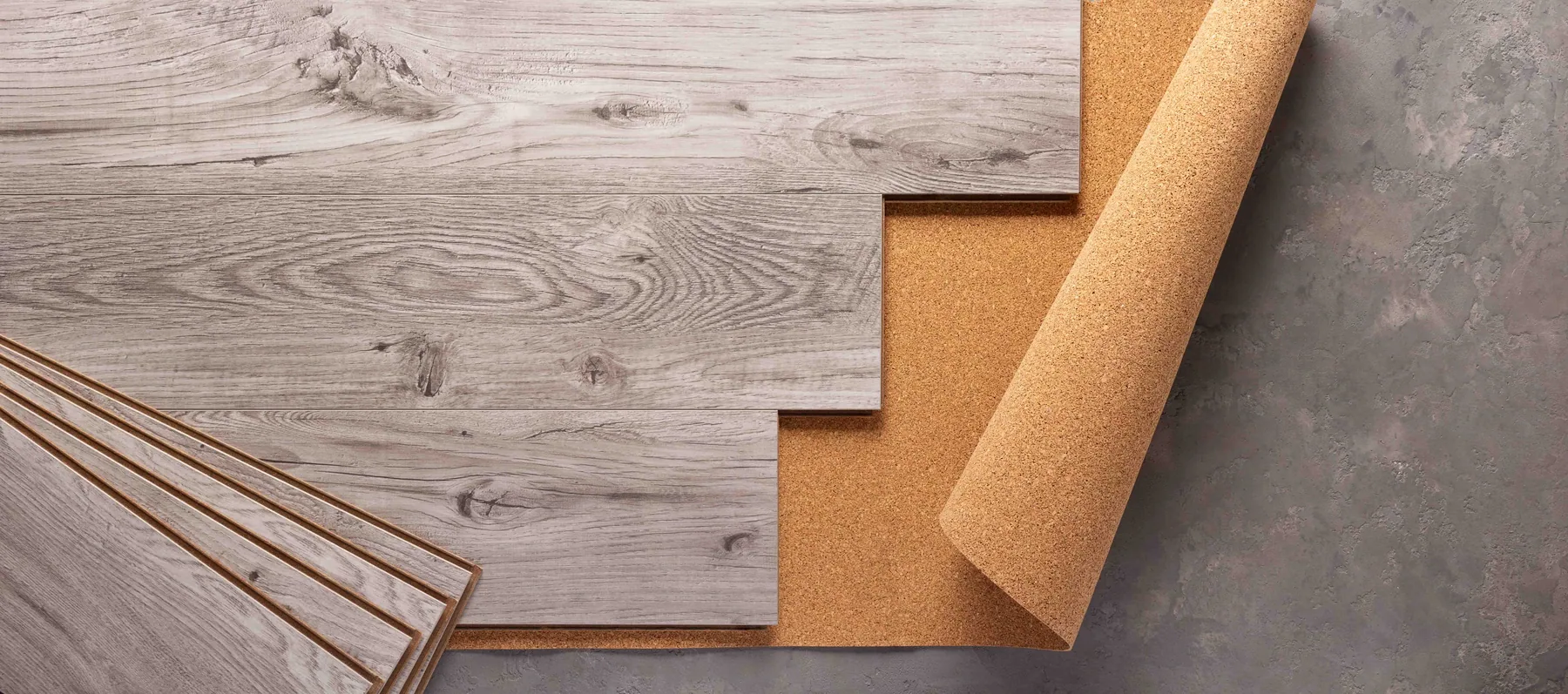
Wood moves seasonally. It has to be installed with a gap at every wall and vertical obstruction so it has somewhere to go when it expands in July. That gap is hidden under baseboard and shoe moulding — you never see it, which is why it is tempting to skip.
A floor installed tight to the walls has nowhere to expand, so it pushes against itself. The result is cupping, buckling or a floor that lifts off the subfloor entirely.
4. The wrong product for the location
Solid hardwood below grade is the classic version of this. It belongs above grade in a conditioned space. In a basement, engineered hardwood or rigid-core luxury vinyl plank are the correct choices — and modern engineered products look, feel and refinish well enough that this is no longer a compromise.
WHAT PREVENTION ACTUALLY LOOKS LIKE
- Moisture test the subfloor — slab or crawlspace — before ordering material, not after delivery
- Acclimate the material in the conditioned home for the manufacturer’s stated period
- Address the crawlspace with a ground vapour barrier and sealed vents where conditions call for it
- Flatten the subfloor before installing — hollow spots become squeaks and movement later
- Leave proper expansion gaps at every wall, island and vertical obstruction
- Match the product to the grade level — engineered or LVP below grade, never solid hardwood
Flooring is a fast job on site and an unforgiving one. The prep is the project.
IF YOUR FLOOR IS ALREADY CUPPED
Do not sand it. That is the instinct, and it is the thing that turns a reversible problem into a permanent one.
The correct sequence is: find the moisture source and fix it, then let the floor dry and re-flatten on its own, which it very often does over several weeks or months. Only once moisture readings have stabilised should anyone consider sanding. Sanding a wet floor flat means that when it finally dries, you get crowning instead — and that one cannot be waited out.
THE SHORT VERSION
Cupping is a symptom. The disease is moisture, and the cure is almost always something that should have happened before installation: a test, an acclimation period, a vapour barrier, an expansion gap.
None of those are expensive. They are just invisible, which makes them the first things to disappear when a job is priced to be the cheapest bid in the stack.
SERVING GRAYSON AND THE SURROUNDING COMMUNITIES
We install and refinish flooring across Gwinnett County — Lawrenceville, Snellville, Loganville, Dacula, Lilburn, Duluth and Suwanee — plus Monroe, Auburn, Winder, Tucker and Stone Mountain, roughly 20 miles around our Gwinnett County studio.
 Start Your Renovation
PLANNING NEW FLOORS?
Beautiful from the ground up.
Tell us what room you have in mind and roughly when you would like to start. Janet reads every message personally and will come back to you with clear next steps — not a sales pitch. Consultations and estimates are always free.
Gwinnett County, Georgia · Serving a 20-mile radius