

Why Quartz Keeps Beating Granite in Duluth, GA Kitchens — And When Natural Stone Still Wins
Quartz has quietly become the default countertop in almost every kitchen we build. That is not marketing — it is maintenance. But there are three situations where we still steer homeowners toward natural stone, and one where quartz is the wrong answer entirely.
Fifteen years ago granite was the aspirational choice and quartz was the compromise. That has completely inverted, and most homeowners around Duluth, Lilburn and Suwanee now arrive already leaning toward quartz without quite knowing why.
Here is the actual difference, minus the showroom script.
WHAT THEY ACTUALLY ARE
Granite is natural stone, quarried and cut into slabs. Every slab is unique and it is porous, which means it absorbs liquid unless it is sealed.
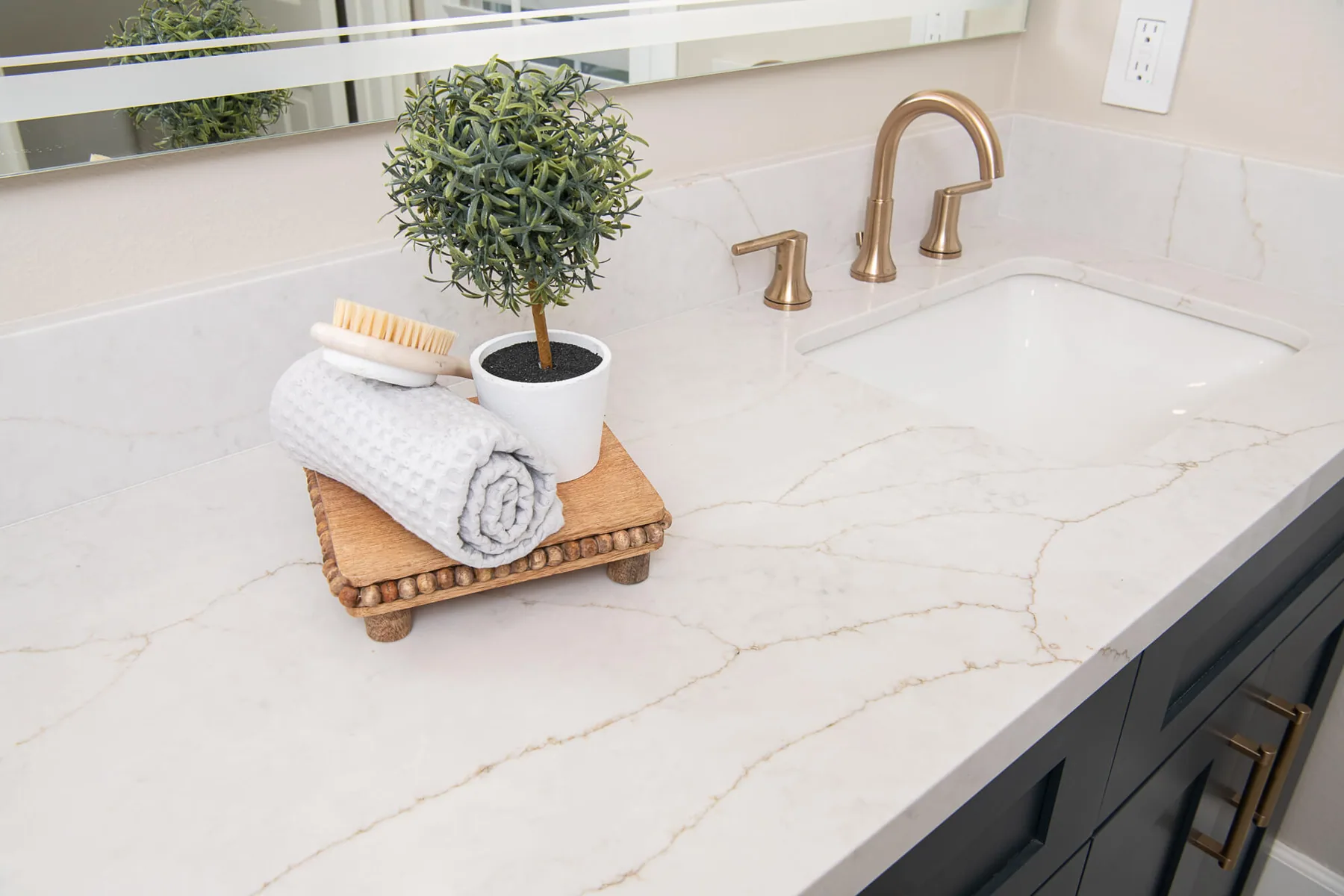
Quartz is engineered: roughly 90–95 percent ground natural quartz bound with resin and pigment. It is manufactured, so it is consistent — and because the resin fills the structure, it is non-porous.
Almost every practical difference between them follows from that one property.
WHY QUARTZ WINS FOR MOST HOUSEHOLDS
It never needs sealing
Granite should be sealed on installation and periodically thereafter. Most homeowners do it once and never again. An unsealed granite counter absorbs red wine, olive oil, turmeric and lemon juice — and some of those stains are permanent.
Quartz has nothing to seal. That is the entire maintenance conversation.
It is genuinely non-porous
Nothing soaks in, which matters for stains and for hygiene on a surface where you handle raw food. Soap and water is the whole cleaning routine.
You know what you are getting
Granite slabs vary, sometimes dramatically from the sample. You should always view your actual slab. Quartz is consistent batch to batch, which also means seams are far easier to hide — a real advantage on a large island.
It is harder to chip in daily use
Quartz is slightly more flexible thanks to the resin, so it tolerates impact a little better, particularly at the vulnerable edges around a sink cutout.
WHERE GRANITE AND NATURAL STONE STILL WIN
1. Anywhere genuinely hot things land
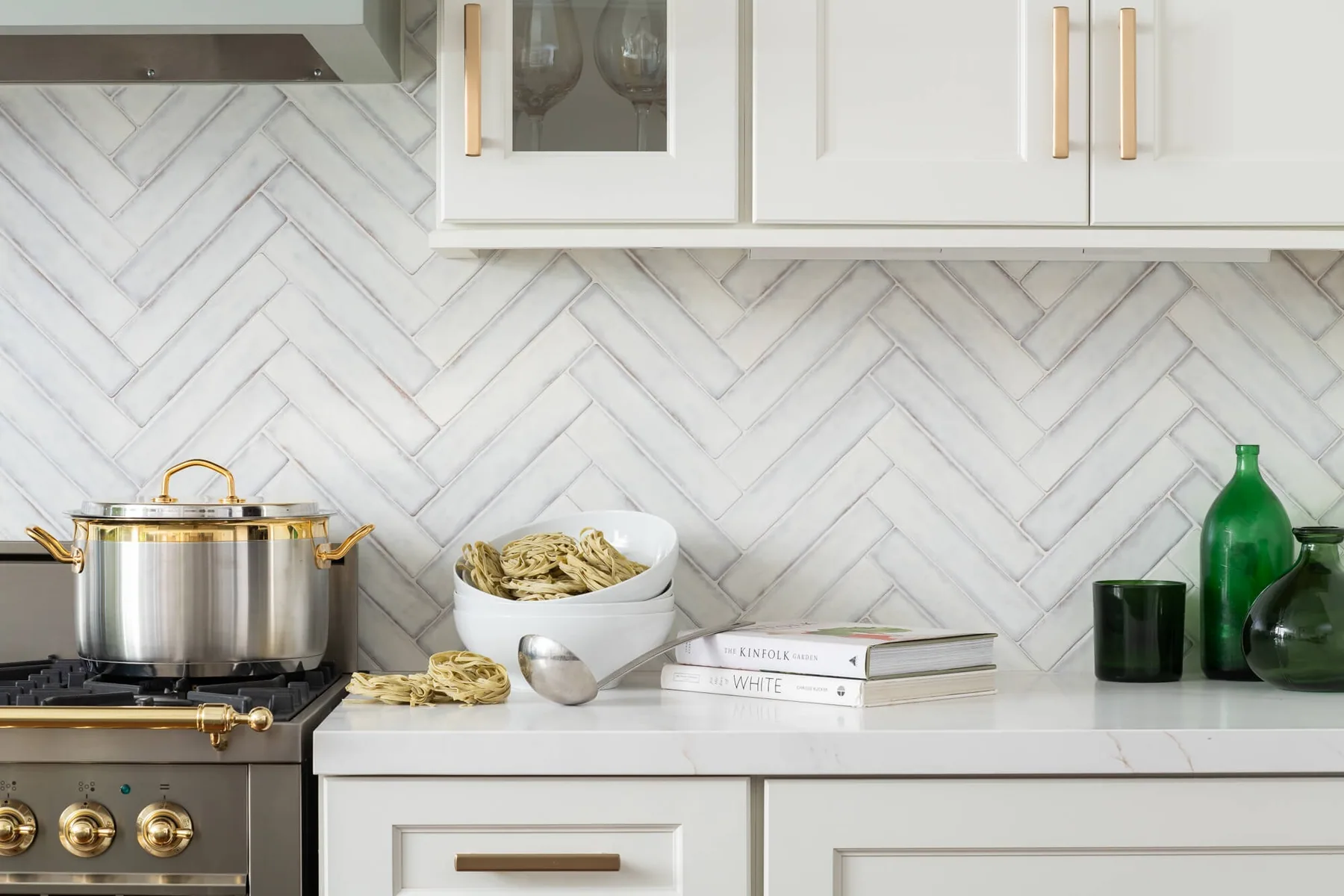
This is the real one. The resin in quartz is a plastic, and it scorches. A pan straight off the burner onto an unprotected quartz counter can leave a permanent mark.
Granite is stone all the way through and handles heat far better. If your household genuinely puts hot cookware down without thinking, that is a legitimate argument for granite — or for a deliberate granite or butcher-block landing zone beside the range with quartz everywhere else.
2. Outdoor kitchens and anywhere with direct sunlight
Quartz resin yellows and degrades under sustained UV exposure. Quartz does not belong outdoors, and in a kitchen with an unshaded south-facing window directly over a run of counter, it is worth a conversation. Granite is unbothered.
3. When you want something genuinely one of a kind
Quartz has become very good at imitating marble, but it is still a pattern printed to a spec. A dramatic natural slab — soapstone, quartzite, a bold granite — has a depth and irregularity that engineered material cannot replicate. If the counter is meant to be the feature of the room, natural stone still has something to offer.
Choose quartz for how you live. Choose natural stone when you want the counter to be the thing people notice.
WHAT ABOUT MARBLE?
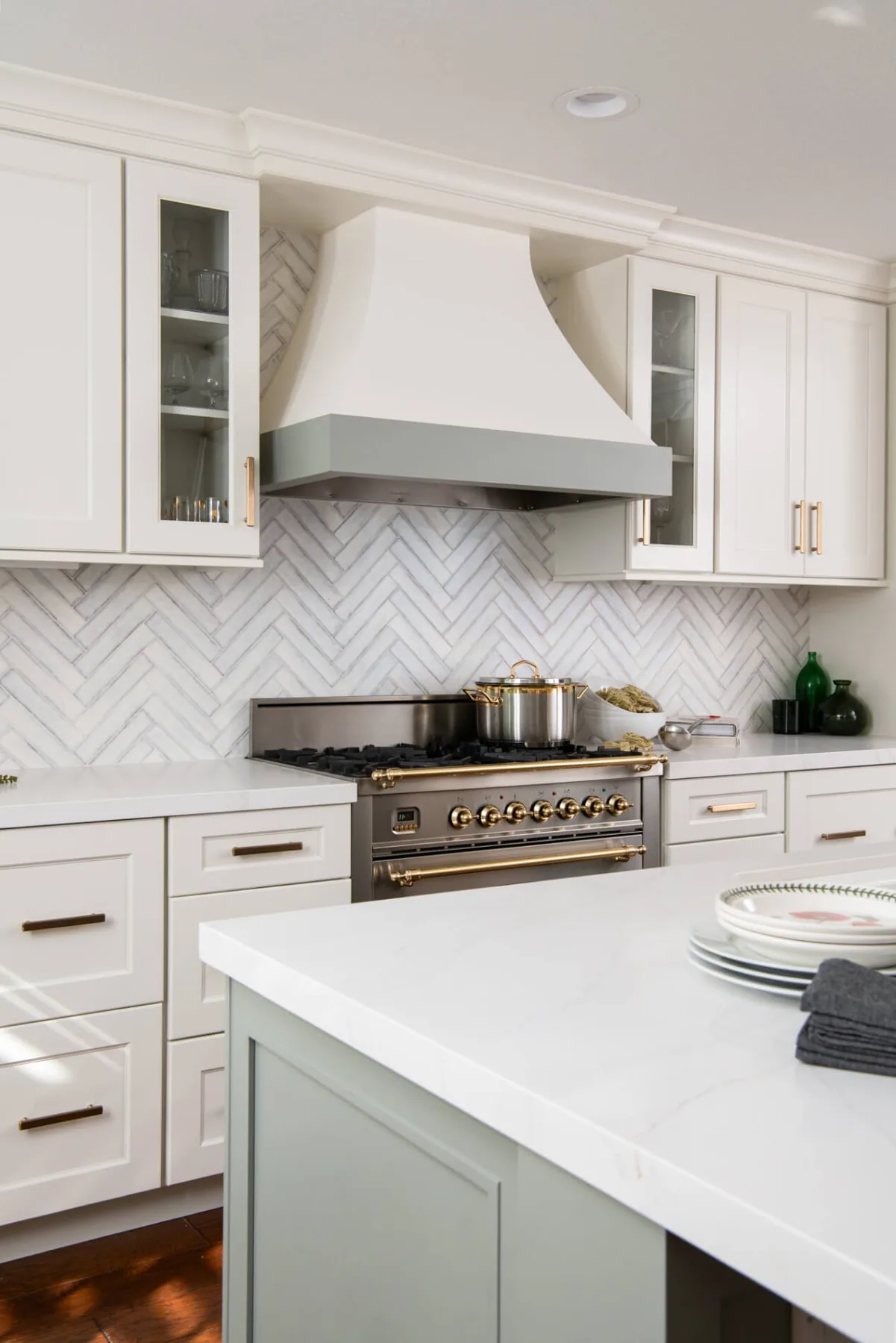
Marble is the most beautiful kitchen counter material and the most demanding. It is porous, it is soft, and it is reactive — anything acidic, including lemon juice, wine and tomato, etches the surface, which is a dulled mark rather than a stain and cannot be cleaned off.
People who love marble accept that it will develop a patina. People who want their counters to look new in five years should not buy marble, and nobody should be sold it without that conversation having happened.
A reasonable middle path we use often: marble on a baking island or a butler’s pantry, quartz on the main working runs.
QUARTZITE: THE ONE PEOPLE CONFUSE
Quartzite is natural stone, not engineered, and despite the name it has nothing to do with quartz countertops. It is extremely hard, heat tolerant and often looks like marble. It is porous and needs sealing, and it costs more.
If you want marble’s look with granite’s durability, quartzite is the answer — just confirm you are being sold genuine quartzite, because the label gets applied loosely.
WHAT WE ACTUALLY RECOMMEND
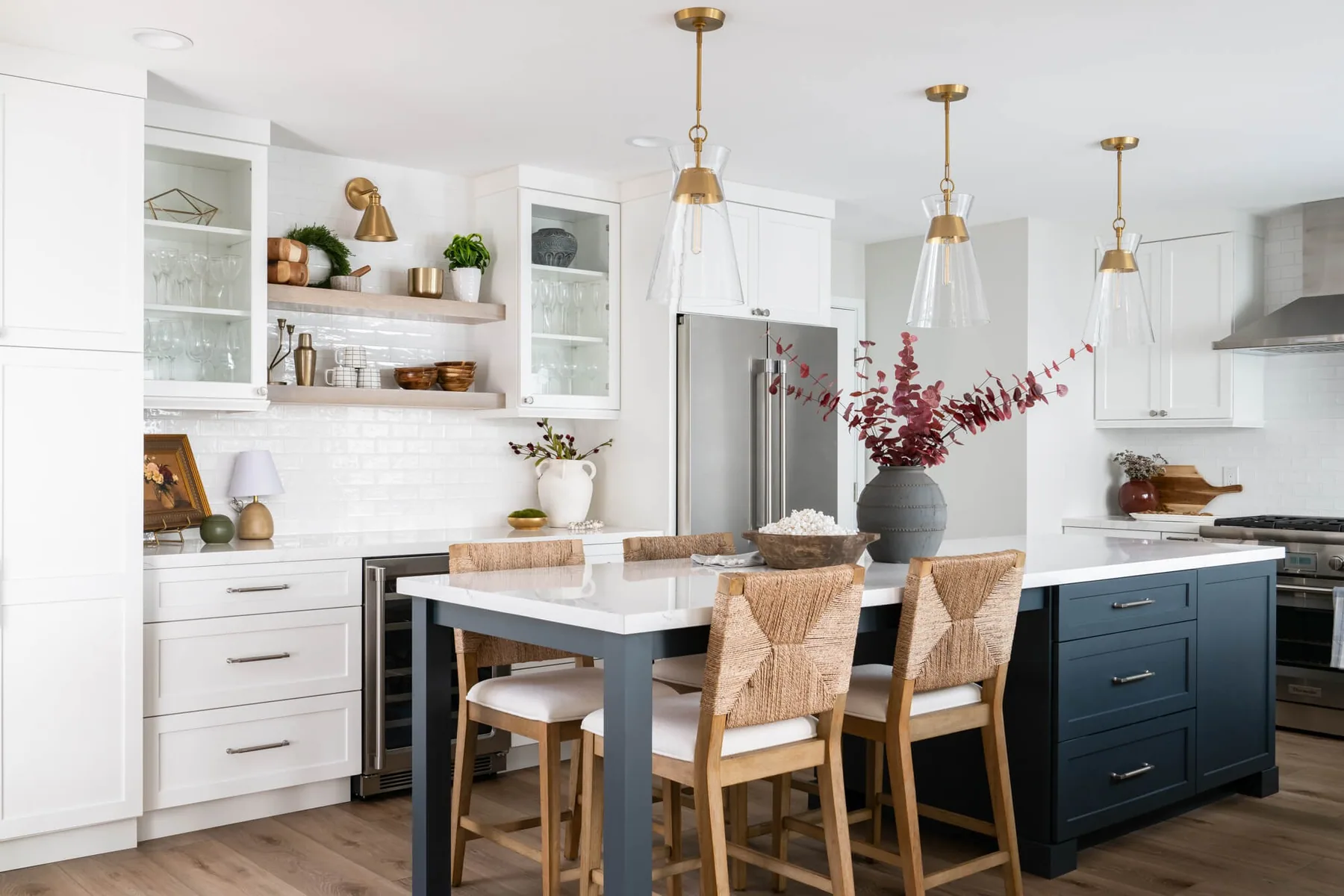
- Most kitchens: quartz on the perimeter and the island. Lowest maintenance, most consistent result.
- Serious cooks: quartz throughout with a granite or butcher-block landing zone beside the range.
- Bakers: a marble or quartzite section on the island, quartz elsewhere.
- Outdoor kitchens: granite or porcelain slab. Never quartz.
- Statement islands: a dramatic natural slab, viewed in person before purchase.
- Rental or resale-driven projects: quartz, every time. It is the lowest-risk choice and buyers recognise it.
Whatever you choose, view the actual slab. Not a sample chip, not a photo — the physical slab your counters will be cut from, in daylight. This is the step most regretted when skipped, and it costs nothing but an hour.
SERVING GRAYSON AND THE SURROUNDING COMMUNITIES
JVR Signature Renovations designs and builds kitchens throughout Gwinnett County — Lawrenceville, Loganville, Snellville, Dacula and Lilburn — plus Monroe, Bethlehem, Auburn, Stone Mountain, Tucker, Duluth, Suwanee and Conyers — roughly a 20-mile radius across Gwinnett, Walton, Barrow, DeKalb and Rockdale counties.
 Start Your Renovation
CHOOSING COUNTERS FOR YOUR KITCHEN?
It’s in the details.
Tell us what room you have in mind and roughly when you would like to start. Janet reads every message personally and will come back to you with clear next steps — not a sales pitch. Consultations and estimates are always free.
Gwinnett County, Georgia · Serving a 20-mile radius